Before I get into the trip report, I wanted to mention that everyone on this tour was so much fun, incredibly talented, and excellent travel buds. I can’t imagine a more diverse group of photographers.
Our Namibian driver/guide looked like a cross between a Viking and Fabio with his long golden locks. He was interesting, kind, and fun to be with. Plus, we all felt extremely safe with him behind the wheel. He is also a gold rated guide, so he was very knowledgeable. Having been to Namibia many times over the years, I can say without hesitation that Johan and the destinations were both excellent.
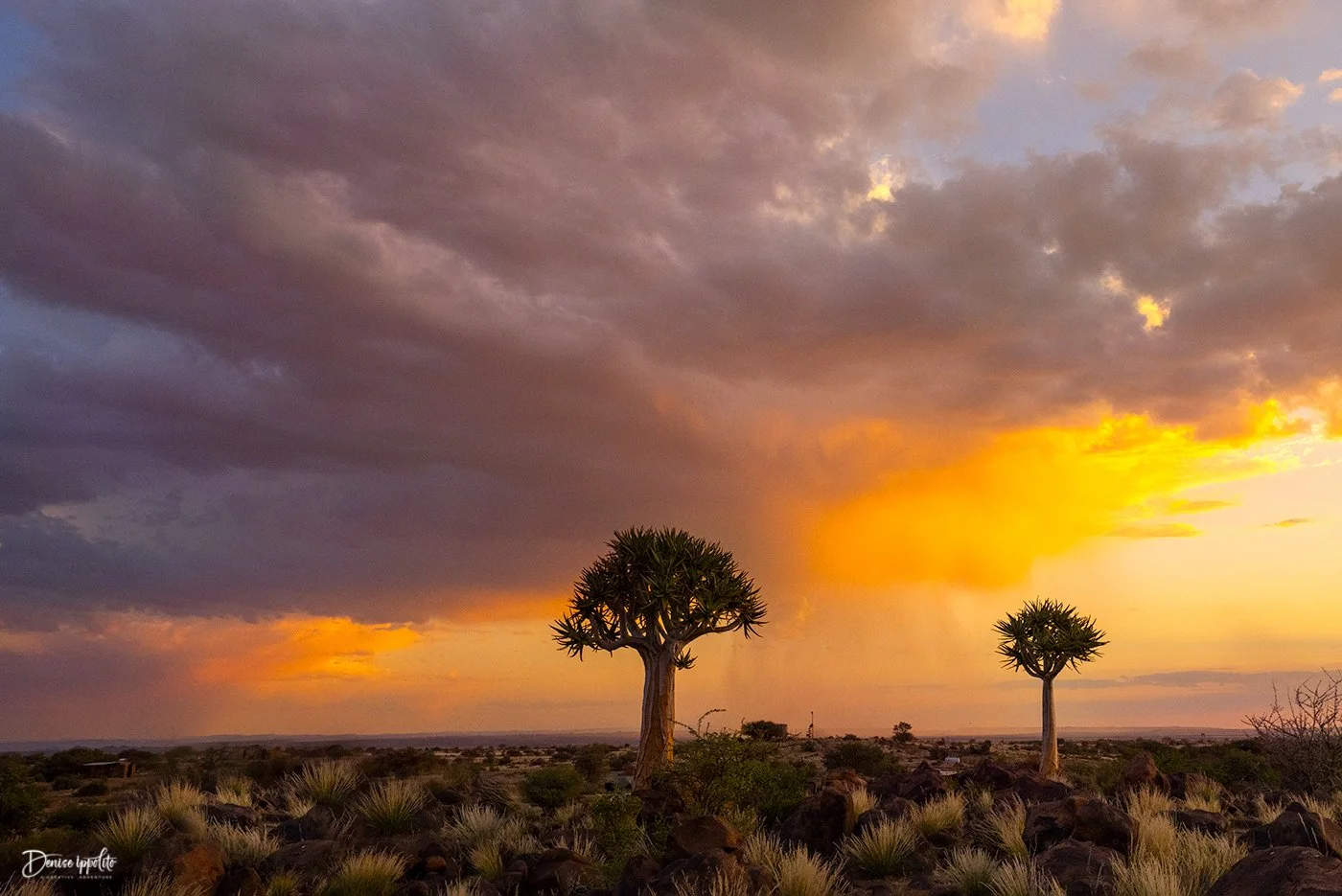
Quiver Trees
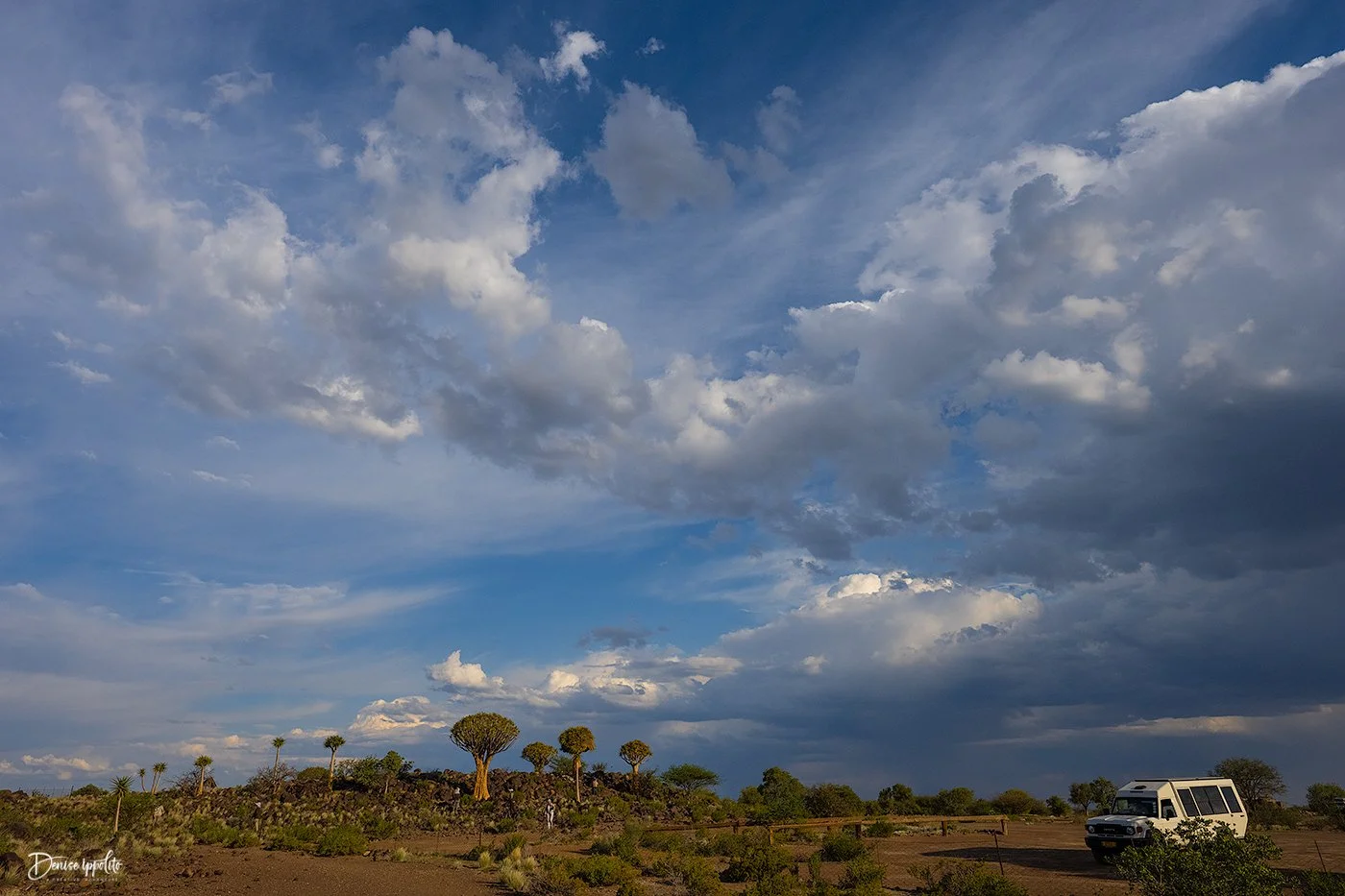
Our Namibia photo tour started in Windhoek where our Johan picked us up. We drove directly to the Quiver Tree Forest. Here our goal was to photograph the quiver trees against a starry sky with a beautiful Milky Way.
We had two nights there and it was a good thing that we did. On our first night we had some clouds—not ideal for Milky Way photography but ultimately, they were a great addition to our photos. However, our second night was magical. The Milky Way gods were looking down on us! I didn’t photograph the Milky Way that night-I was busy instructing the clients.
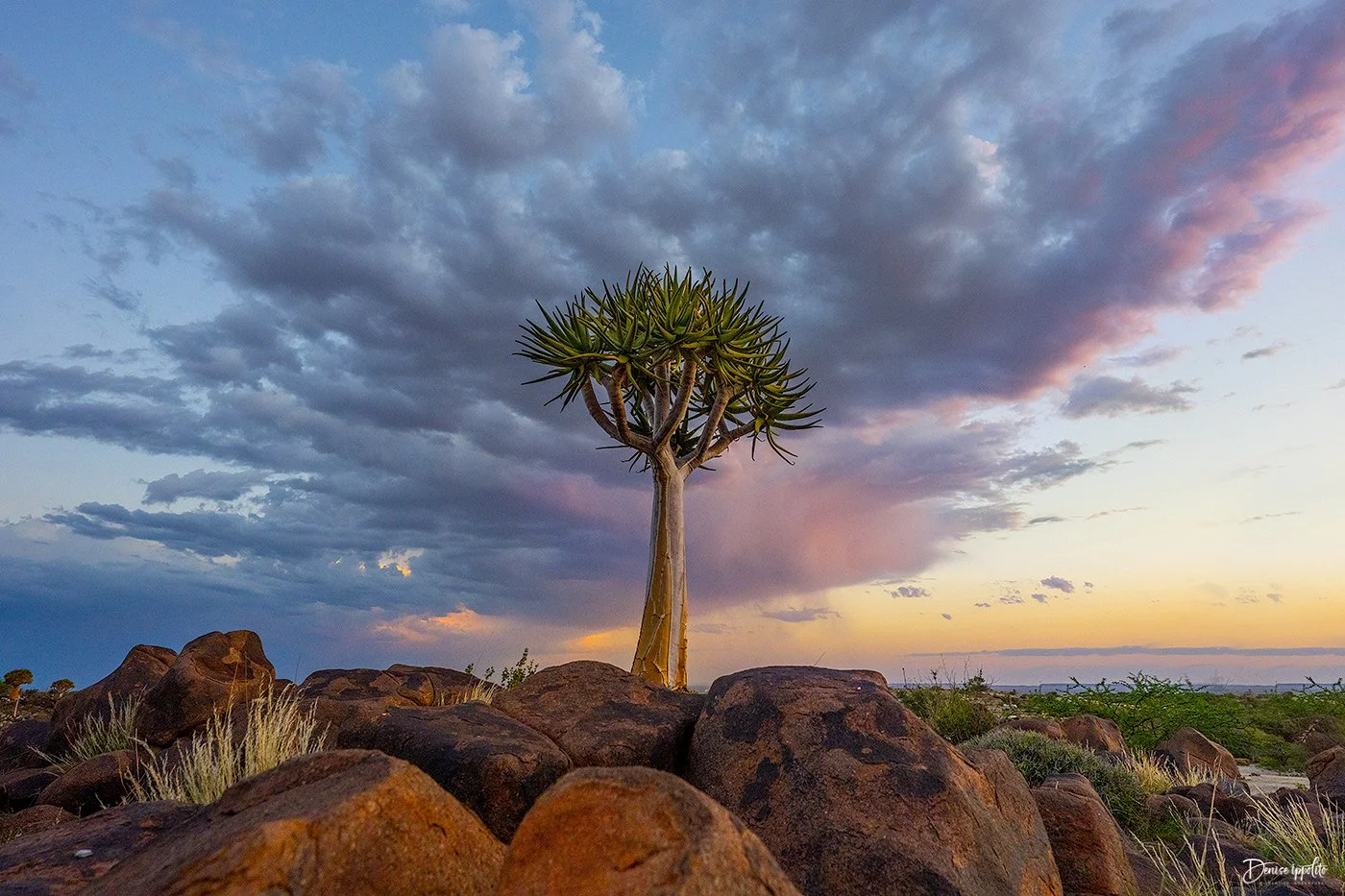
Quiver Tree
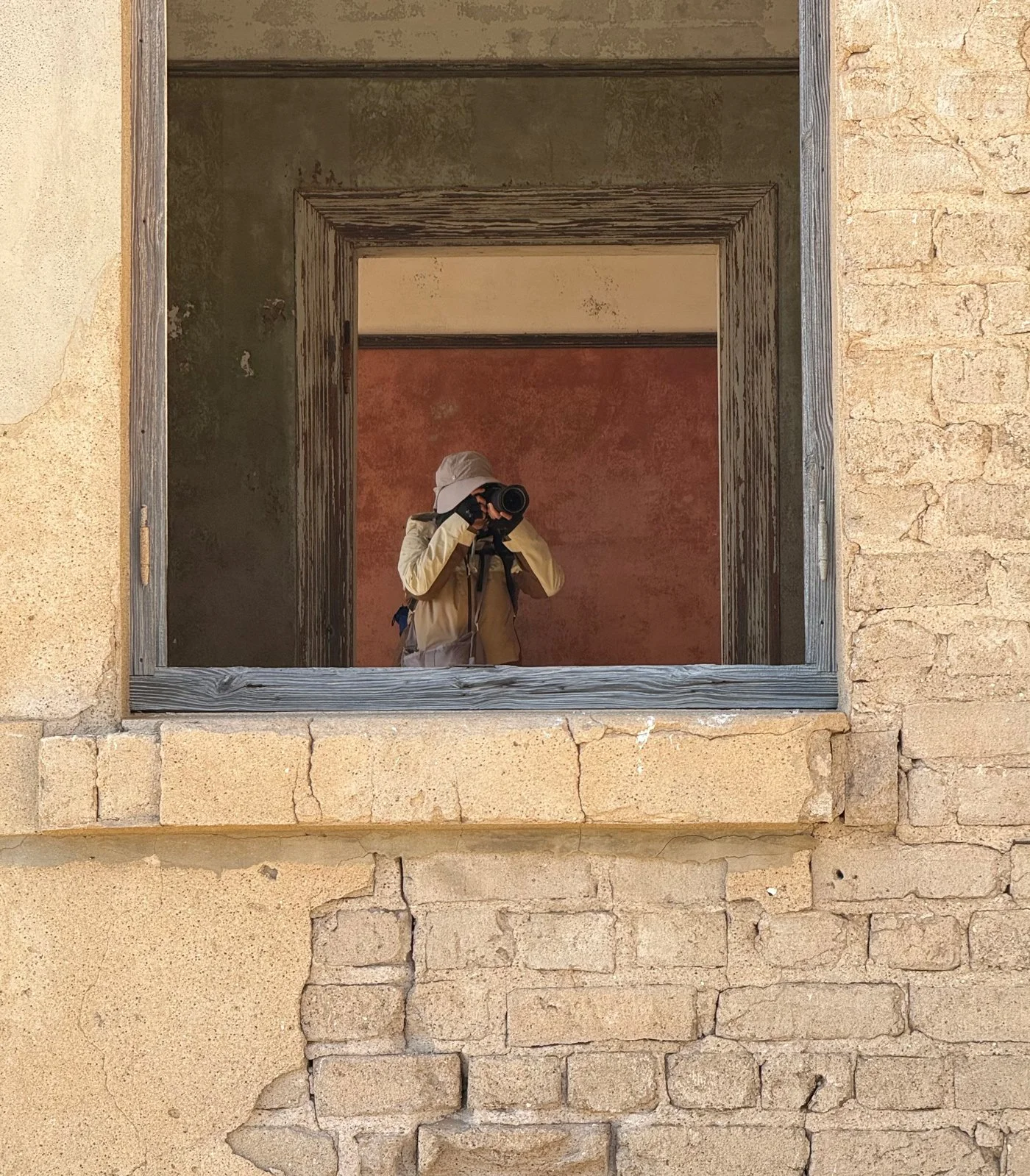
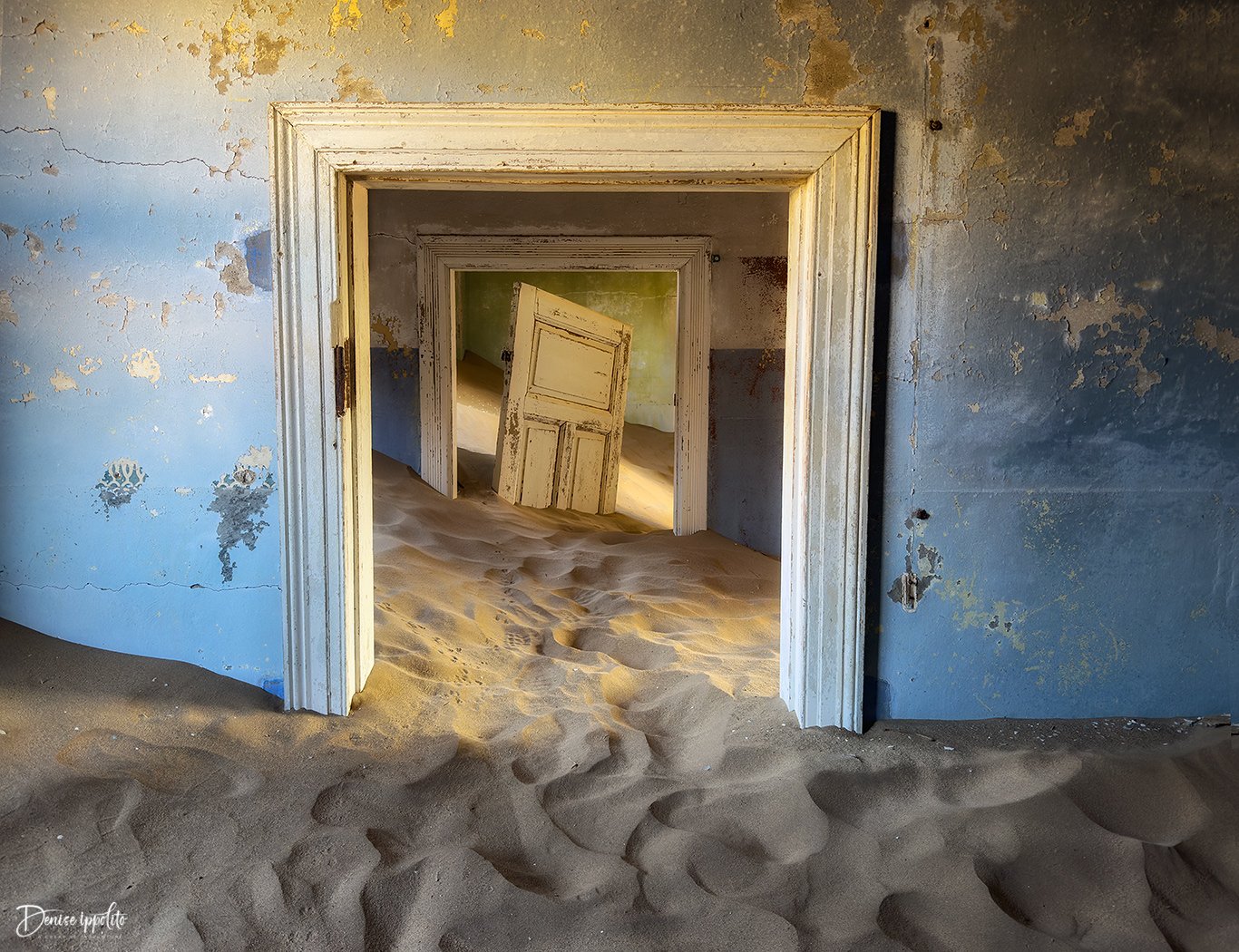
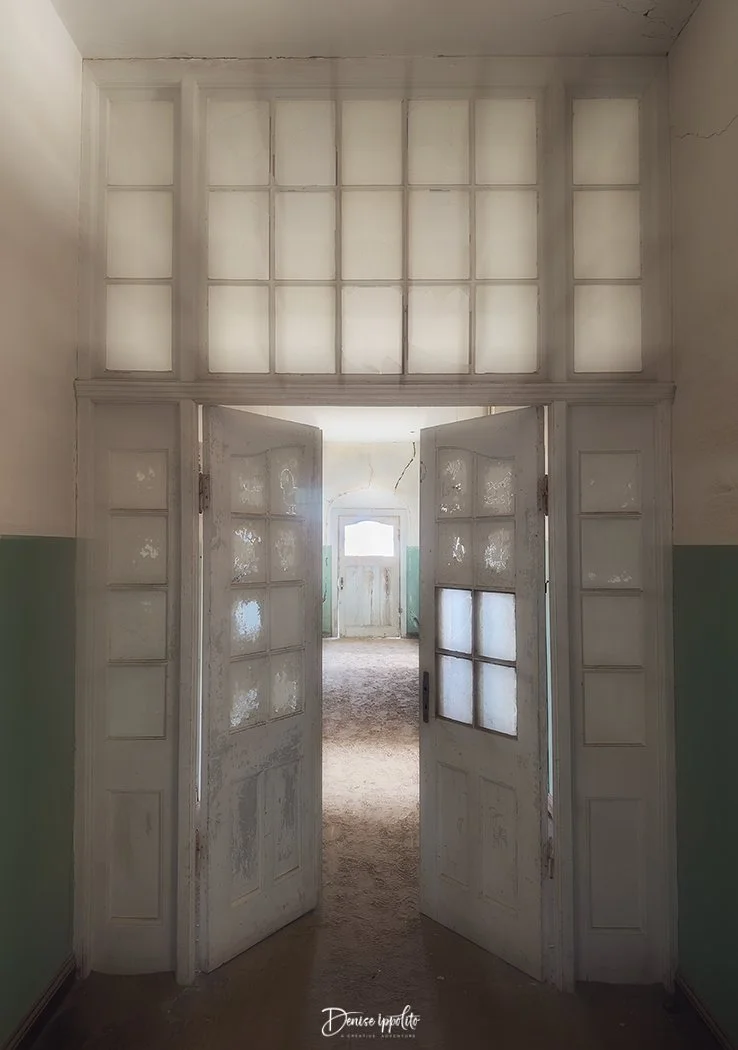
Above are a few of my shots from Kolmanskop-apparently, I like doorways and windows!
After getting our fill of the quiver trees we headed to Lüderitz to photograph at the famous, abandoned, diamond-mining settlement of Kolmanskop, aka the desert ghost town. We had a morning shoot that was fantastic. Then after lunch and a rest we returned for a late afternoon shoot where we all photographed until we had discovered every sand filled room possible. All of the homes and buildings are slowly fading into the earth with sand drifts taking their toll on the once bustling town.
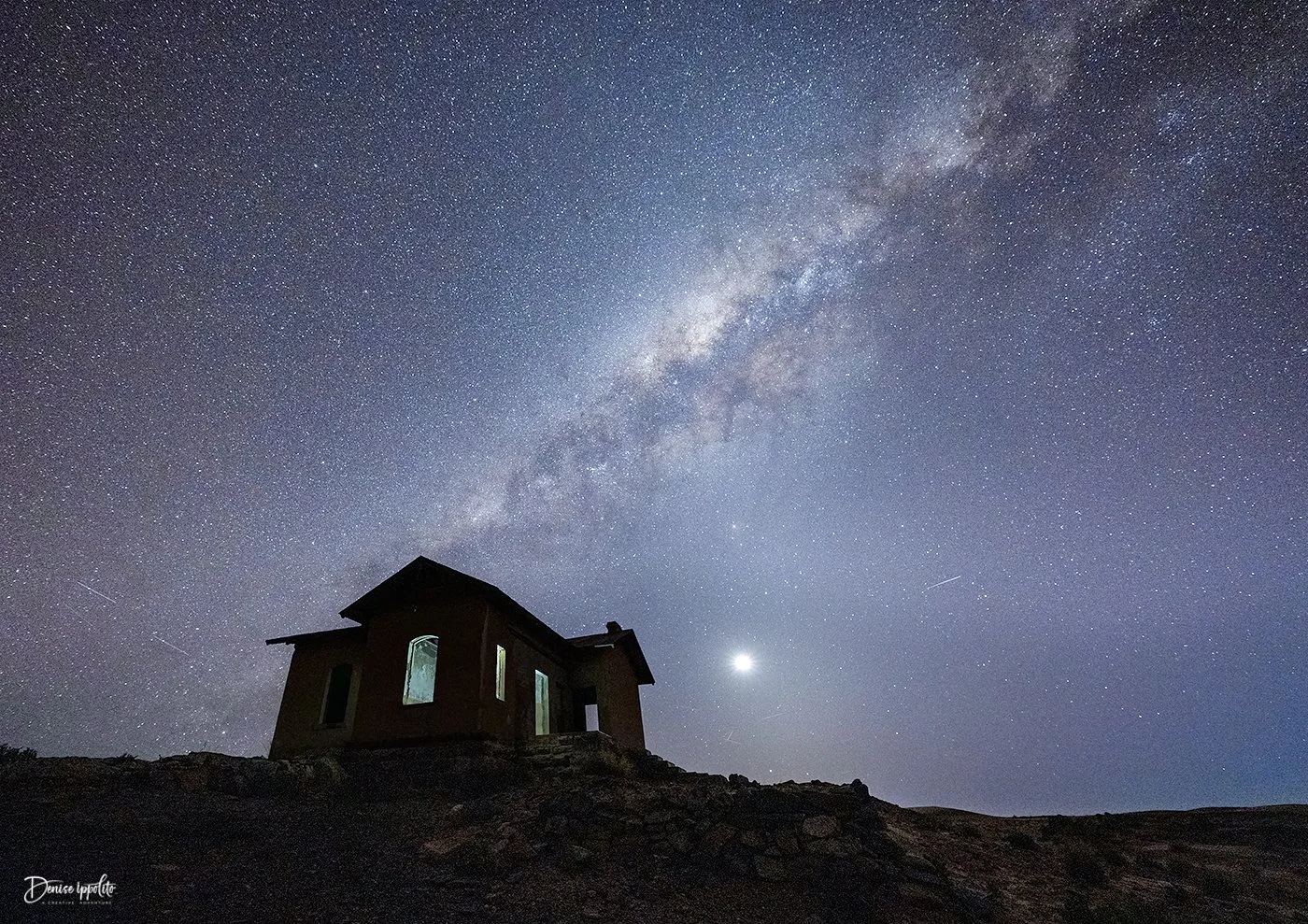
Grasplatz Station with Milky Way
Our last photo shoot in Lüderitz was at Grasplatz Station. It is a deserted railway station that was once part of the Aus–Lüderitz line. It was made famous in 1908 when a Namibian railway worker named Zacharias Lewala found the very first diamond, putting Lüderitz on the map and starting a huge diamond rush. At Grasplatz station we photographed the Milky Way creating our very own diamond rush LOL!
Next on the tour, we stopped at a wonderful hotel/cafe for probably the best apple cake I’ve ever had, and I’ve had plenty over the years! It tasted more like a strudel than a cake, it was loaded with apples and topped with a delicate crumb.
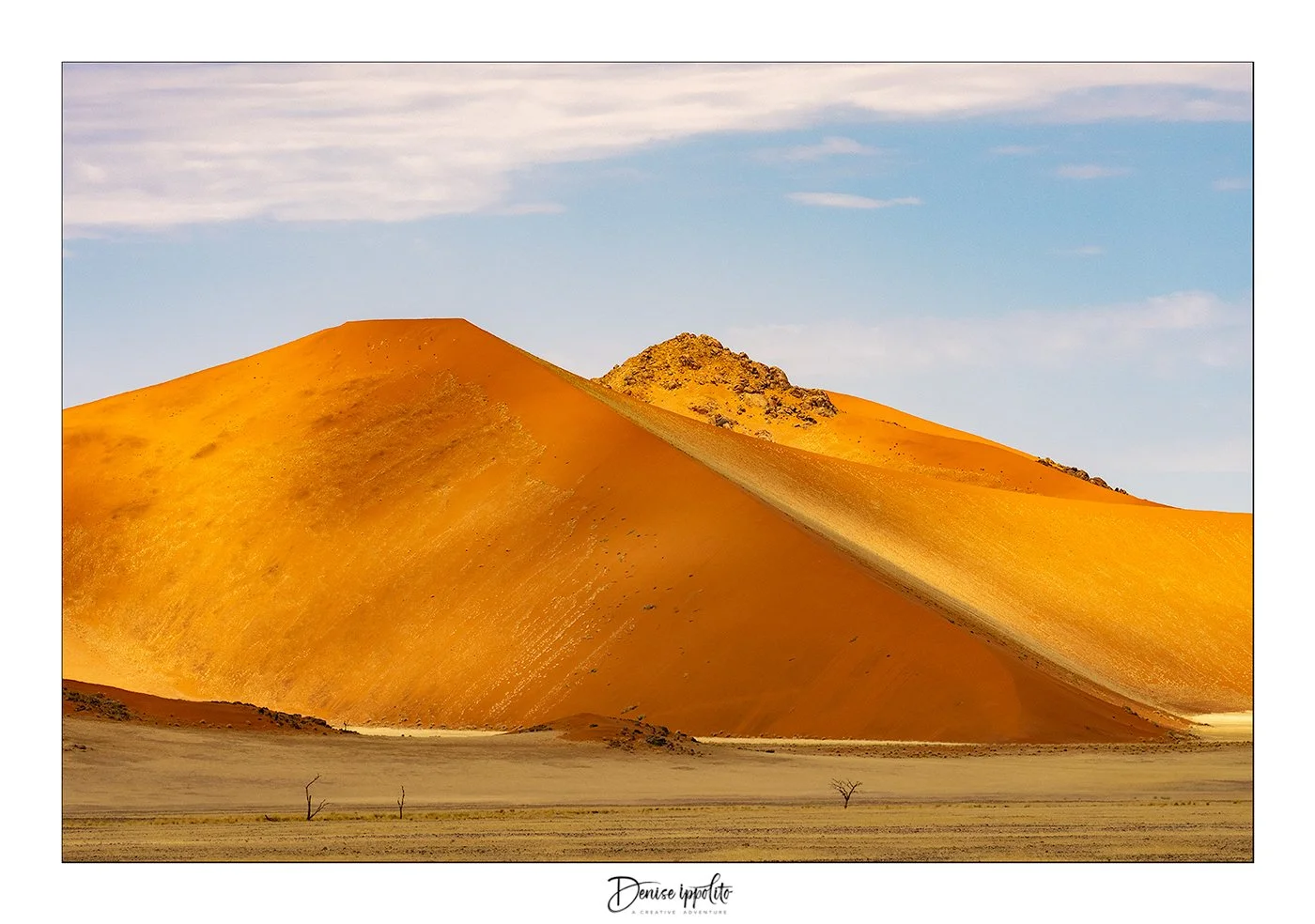
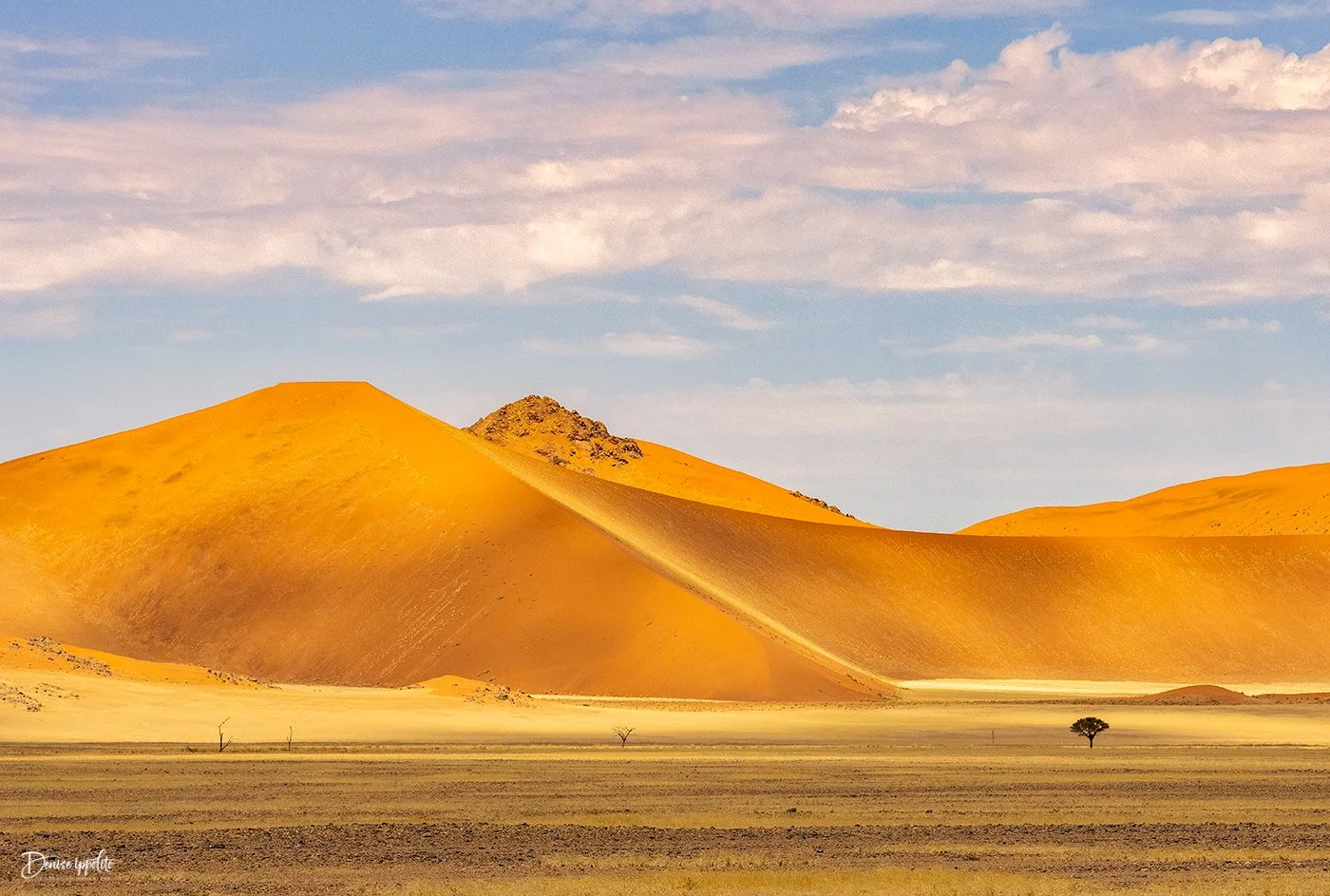
I shot this scene with and without the tree, let me know which you prefer.
From there, we went onto Sossusvlei. This area is part of the Namib desert. It is hot, arid, and filled with extra-large reddish-orange sand dunes that get their color from iron oxide.
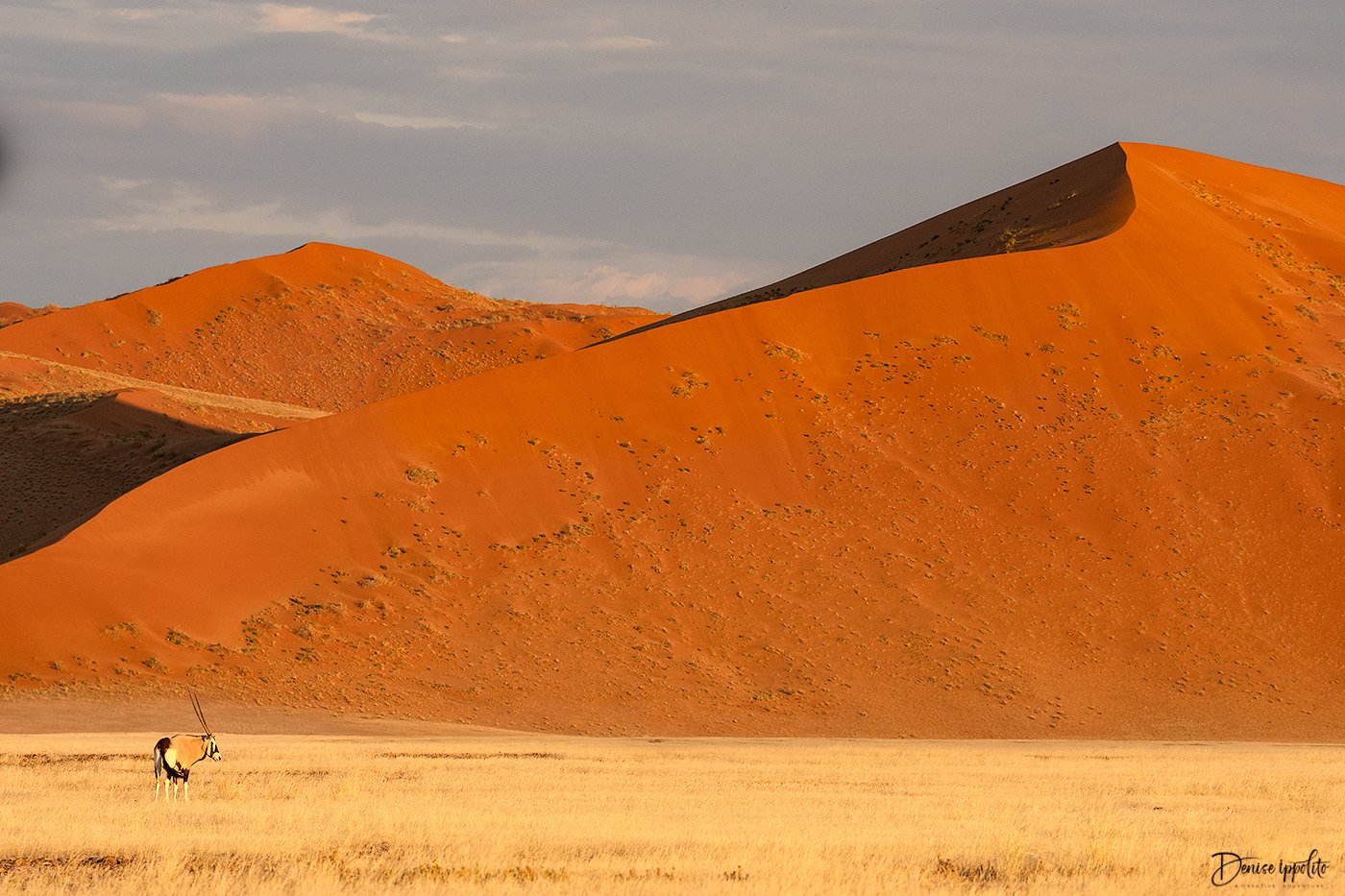
We spent some time looking for Oryx against the dunes, I’m glad we did.
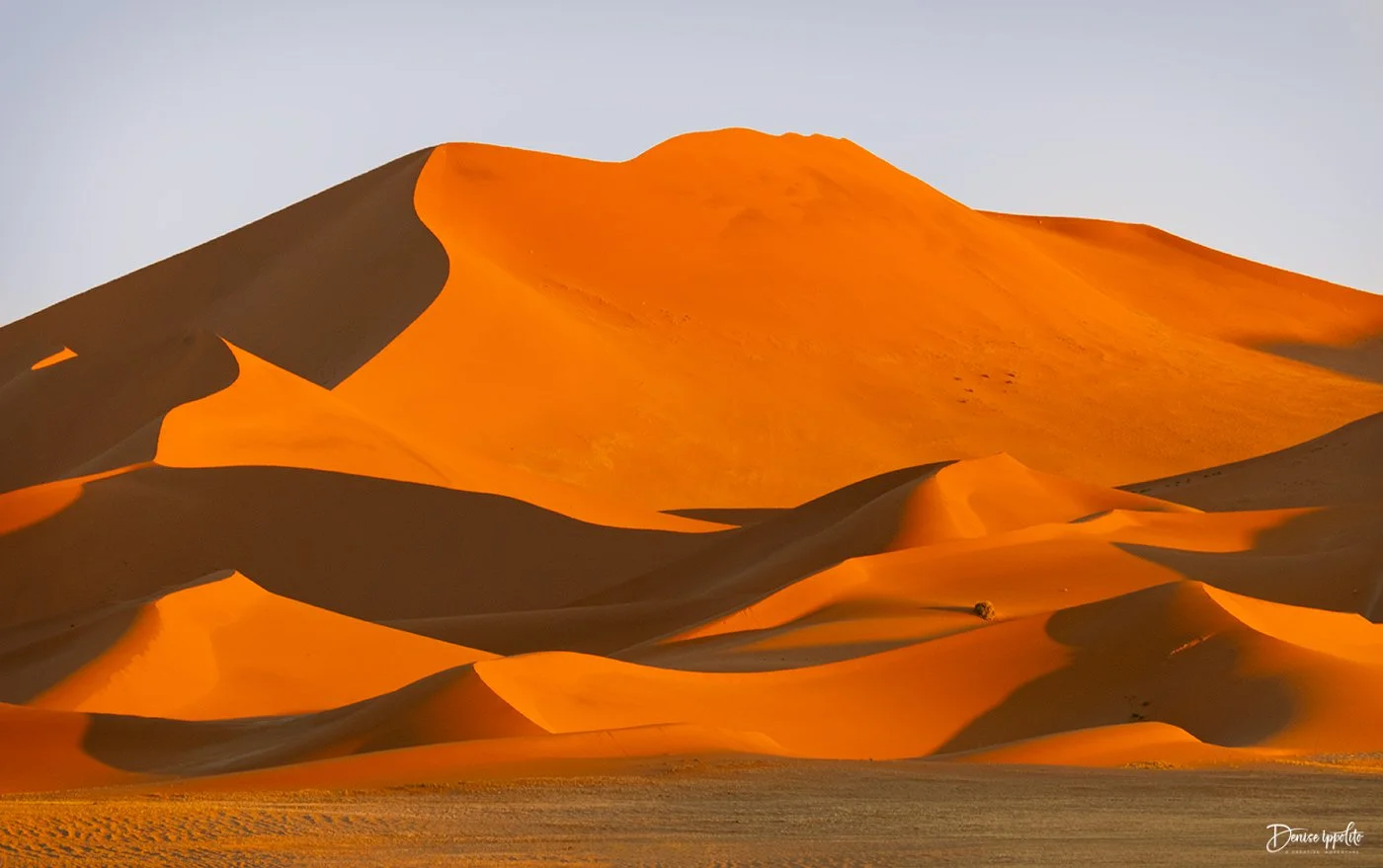
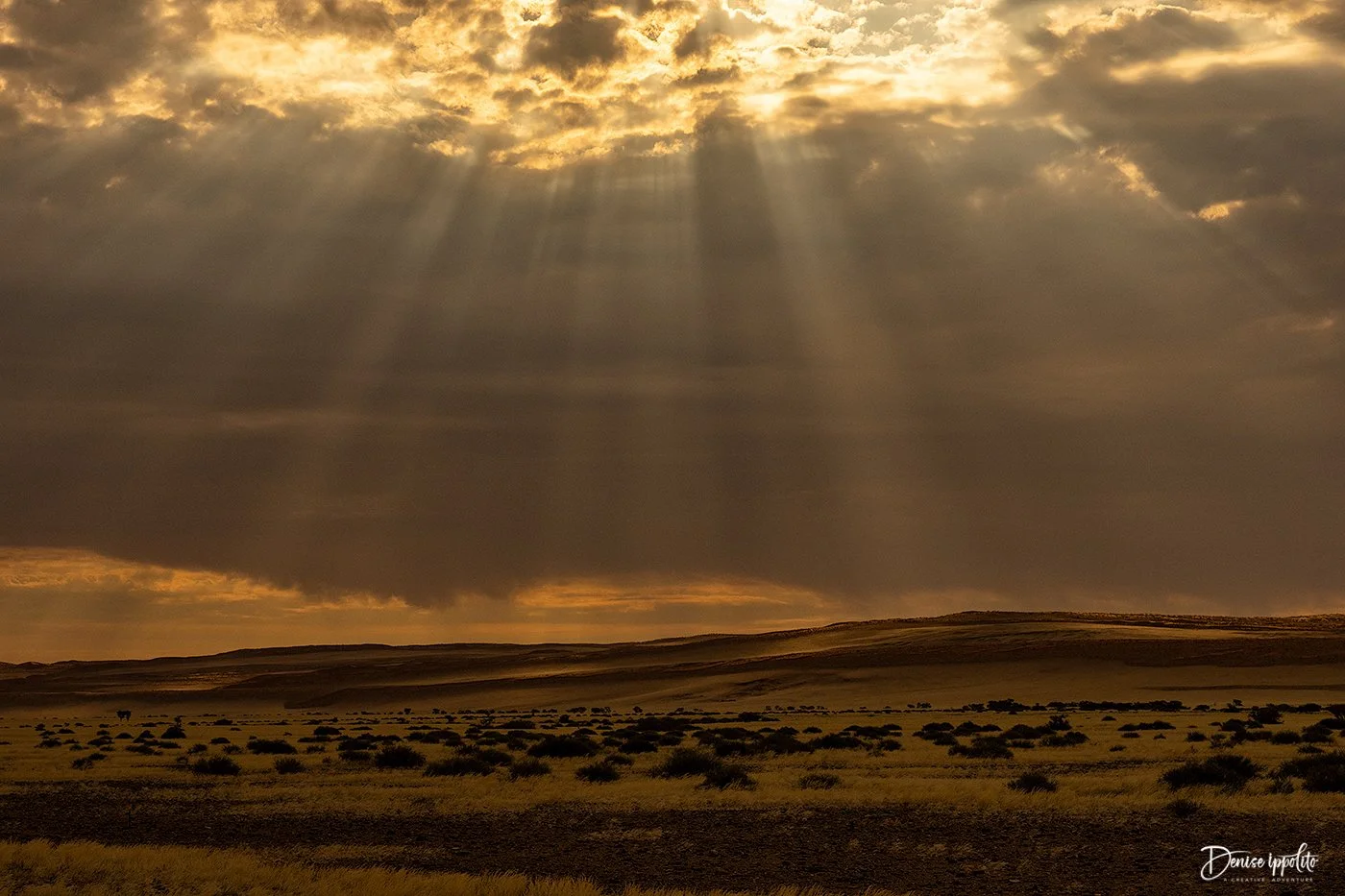
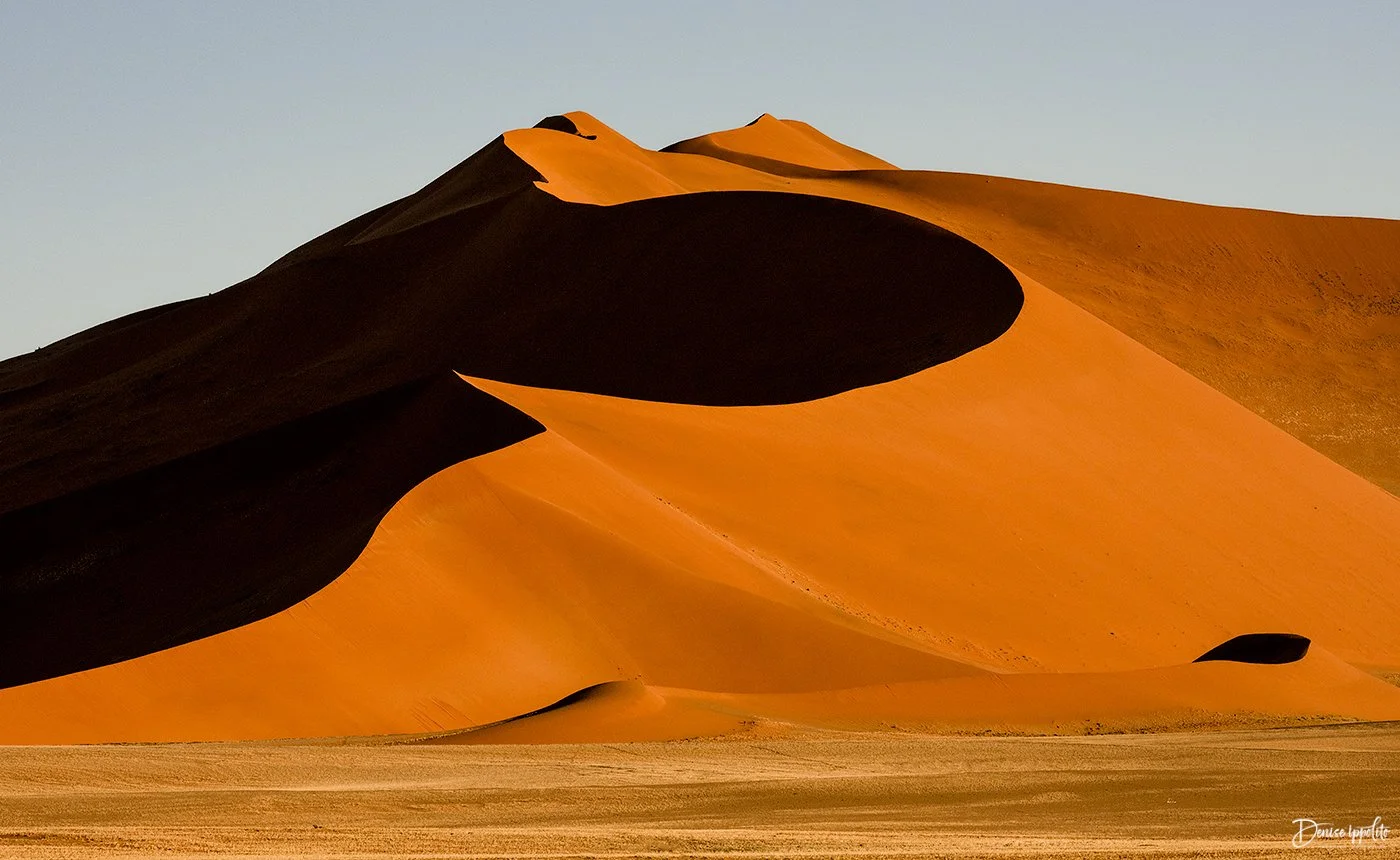
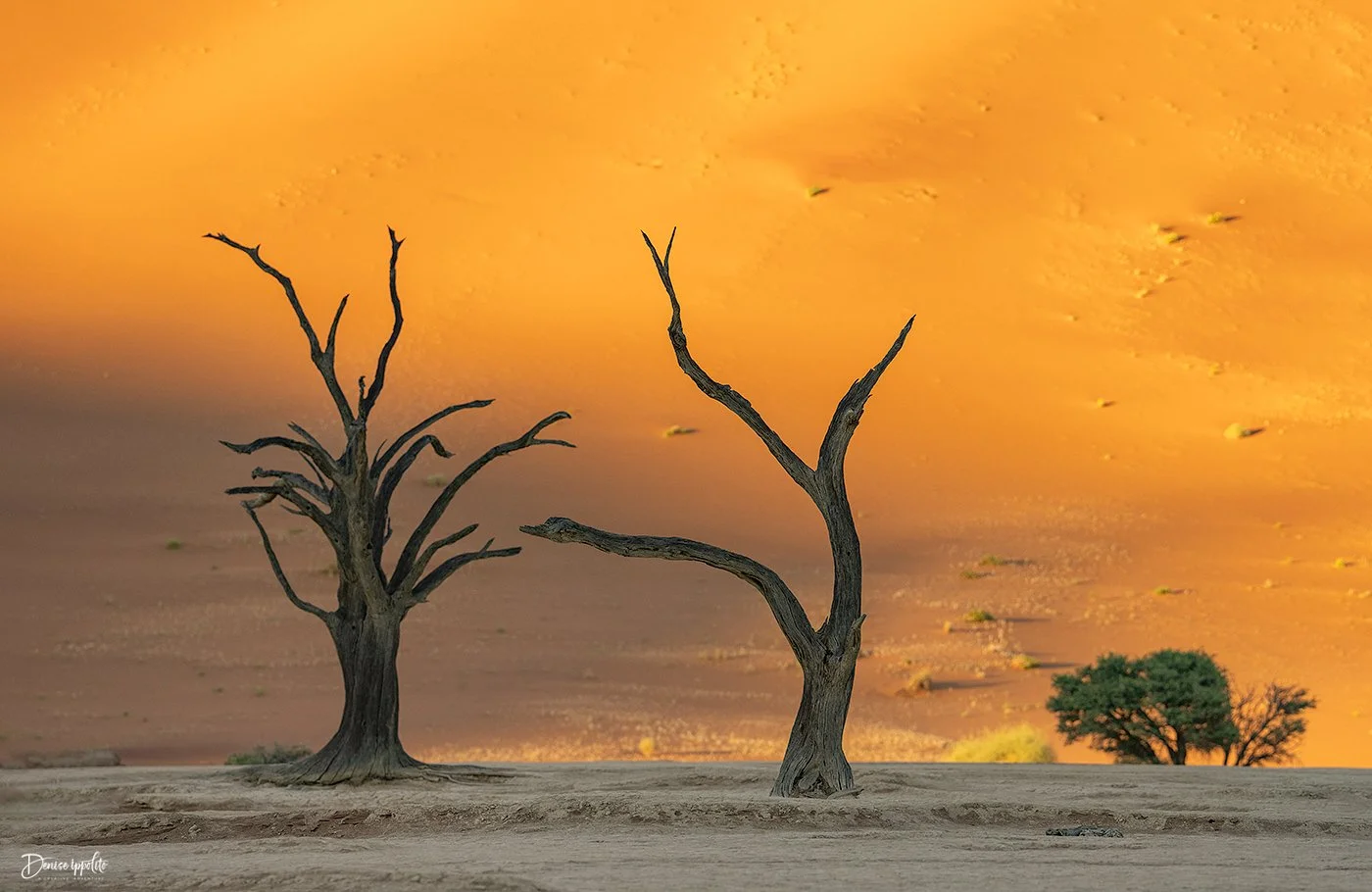
We stayed at a lodge inside the park that allowed early entrance into Deadvlei. Deadvlei is a famous dried up desert pan hosting an array of dead skeletal camel thorn trees said to have been there for over 700 years.
In Sossusvlei we also photographed Oryx and Springbok against the dunes, giant sand dunes at first light and of course notable dunes such as Dune 45 and Big Daddy. We also had an evening shoot at a watering hole with lots of Oryx. The lighting wasn’t great, but it was fun to watch them come in for a drink.
Our next stop on the tour was Swakopmund. This is a coastal town with lots of bird activity including flamingos, pelicans, cormorants, a variety of shorebirds and marine life and desert reptiles. There are also large sand dunes (these dunes are golden toned) near the coast and some fine restaurants, making it a much-desired stop along the tour. Plus, it’s nice and cool along the coast. Our first day in we were greeted with hundreds and hundreds of flamingos, followed by a German inspired dinner.
The next morning, we were picked up at our hotel (our hotel was lovely) and headed to our next adventure. We took a catamaran tour to Pelican Point and other areas of Walvis Bay. We photographed Cape fur seal, Great White pelicans, Cape cormorants, Greater flamingos, dolphins and more. It was truly a fun cruise, finished off with a champagne toast, fresh oysters, and an assortment of canapés.
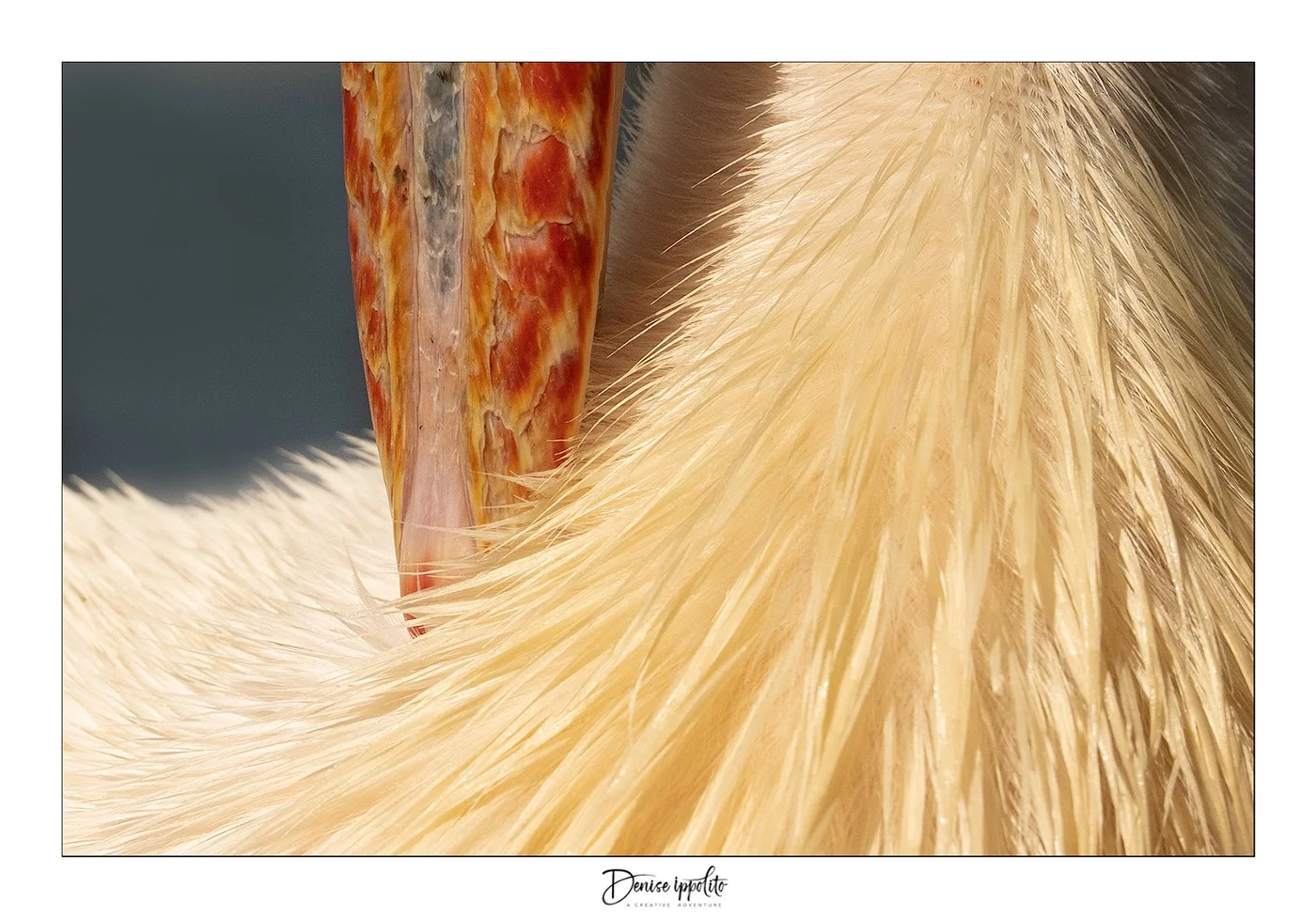
Close-up of a Greater White pelican
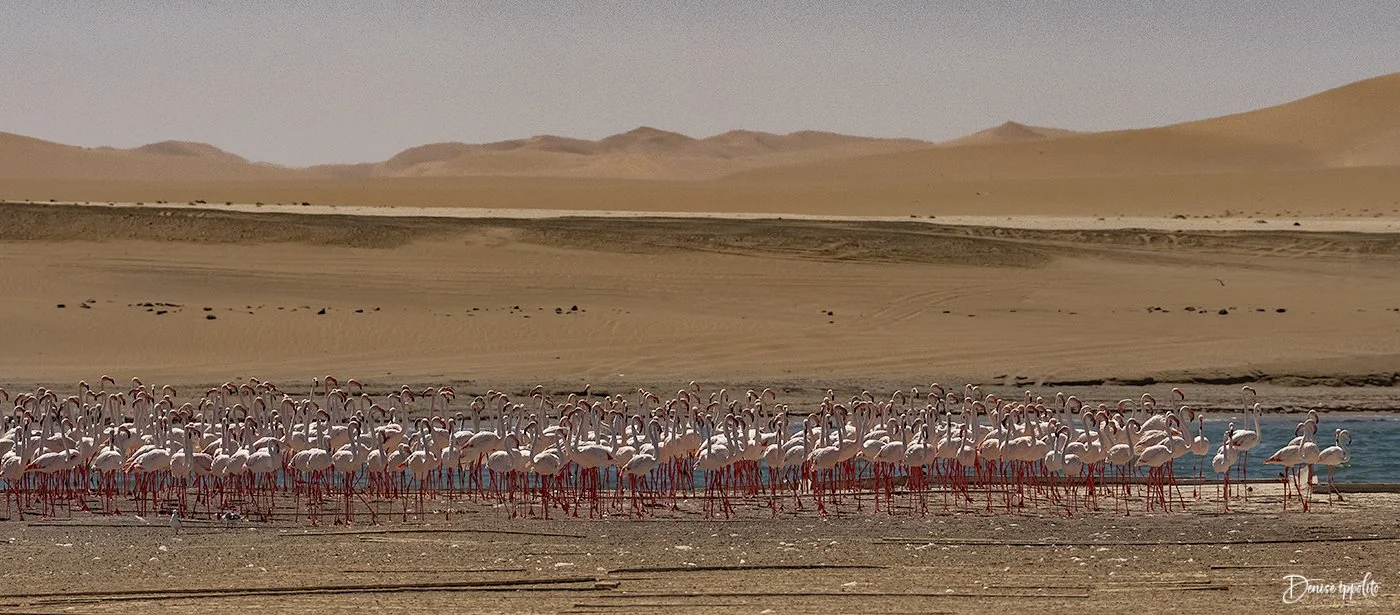
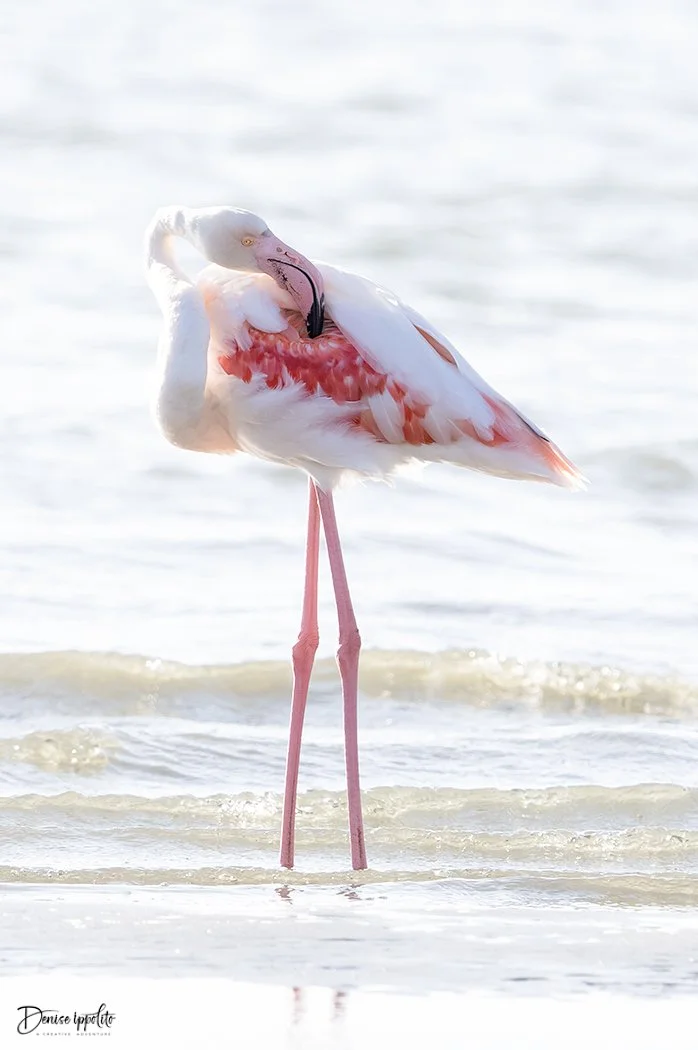
High-key Greater flamingo
In Swakopmund we also did a desert critter adventure featuring: Palmetto gecko, Namaqua Chameleon and a Peringuey Adder snake which is a sidewinder. We also saw an assortment of other critters and some gorgeous sand dunes. Many of the clients were able to capture a shot of the chameleon extending its long tongue to catch a giant beetle. Everyone enjoyed the reptiles; we finished off the afternoon with one of the absolute best Lemon Meringue pies I have ever tasted in my life— no joke!
Our last stop along the way was Etosha. In Etosha we booked the waterfront chalets inside the park. We arranged to stay there because they were located very close to the watering hole. However, the NP messed up our reservations and put half the group into the watering hole chalets and the other half (mainly me and the guide) of the group into cabins. It was fine, both were air conditioned.
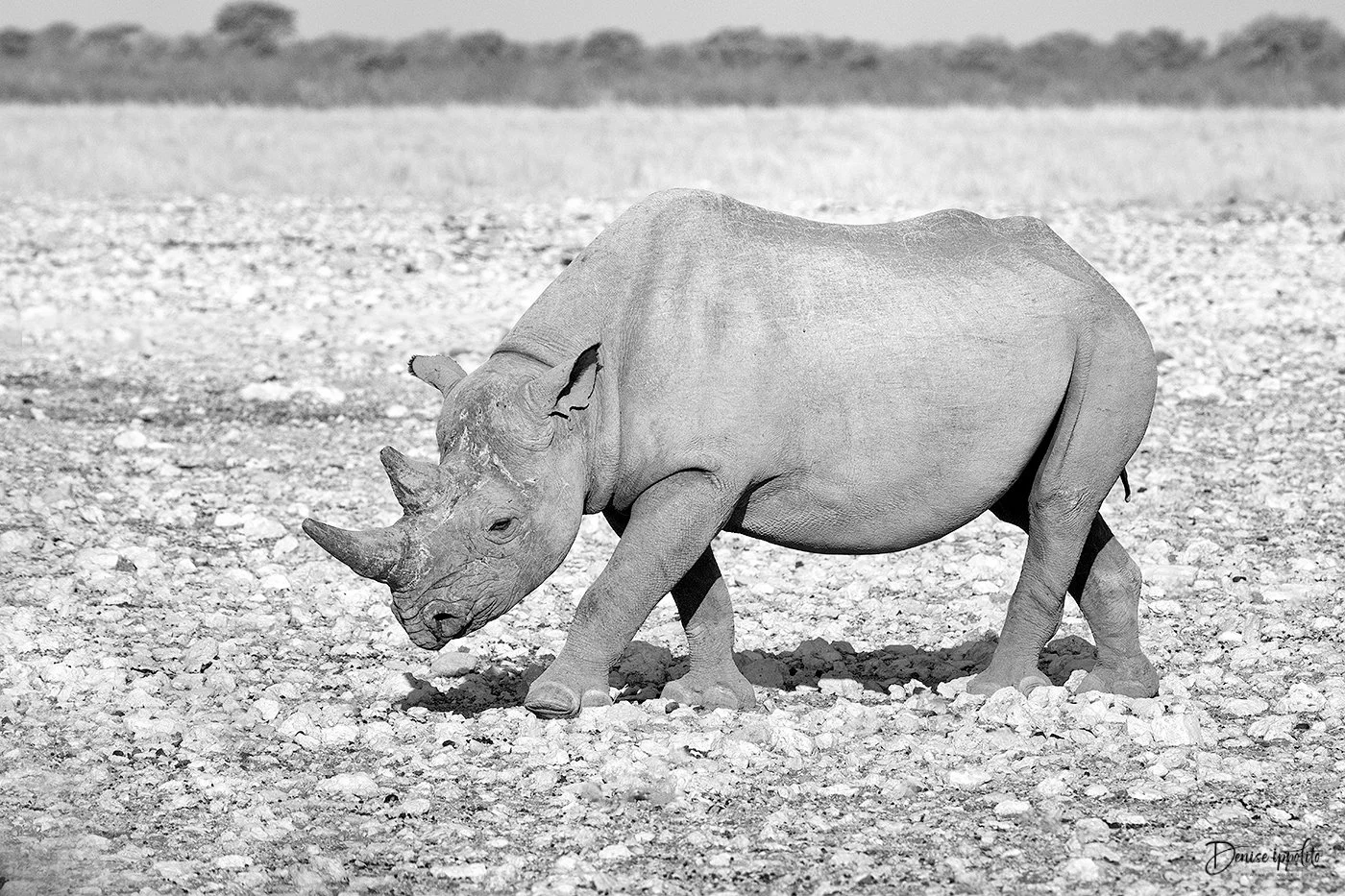
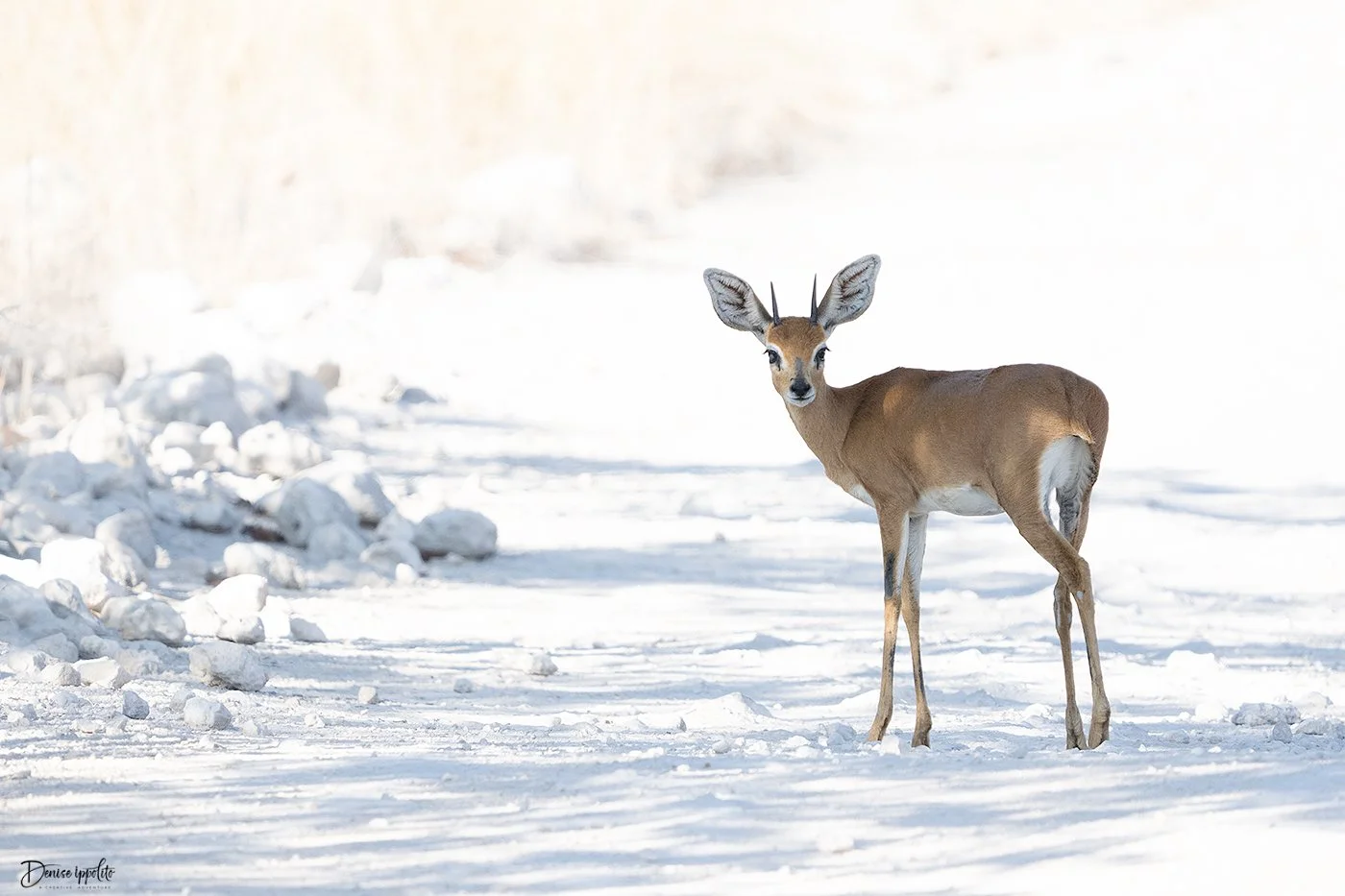
At the watering hole we photographed an assortment of wildlife coming in to drink at night, most notably the Black rhinoceros. There were giraffes drinking and spraying water, zebras, elephants, jackals and more each night. In addition, we also did conventional safari drives in the morning and late afternoons.
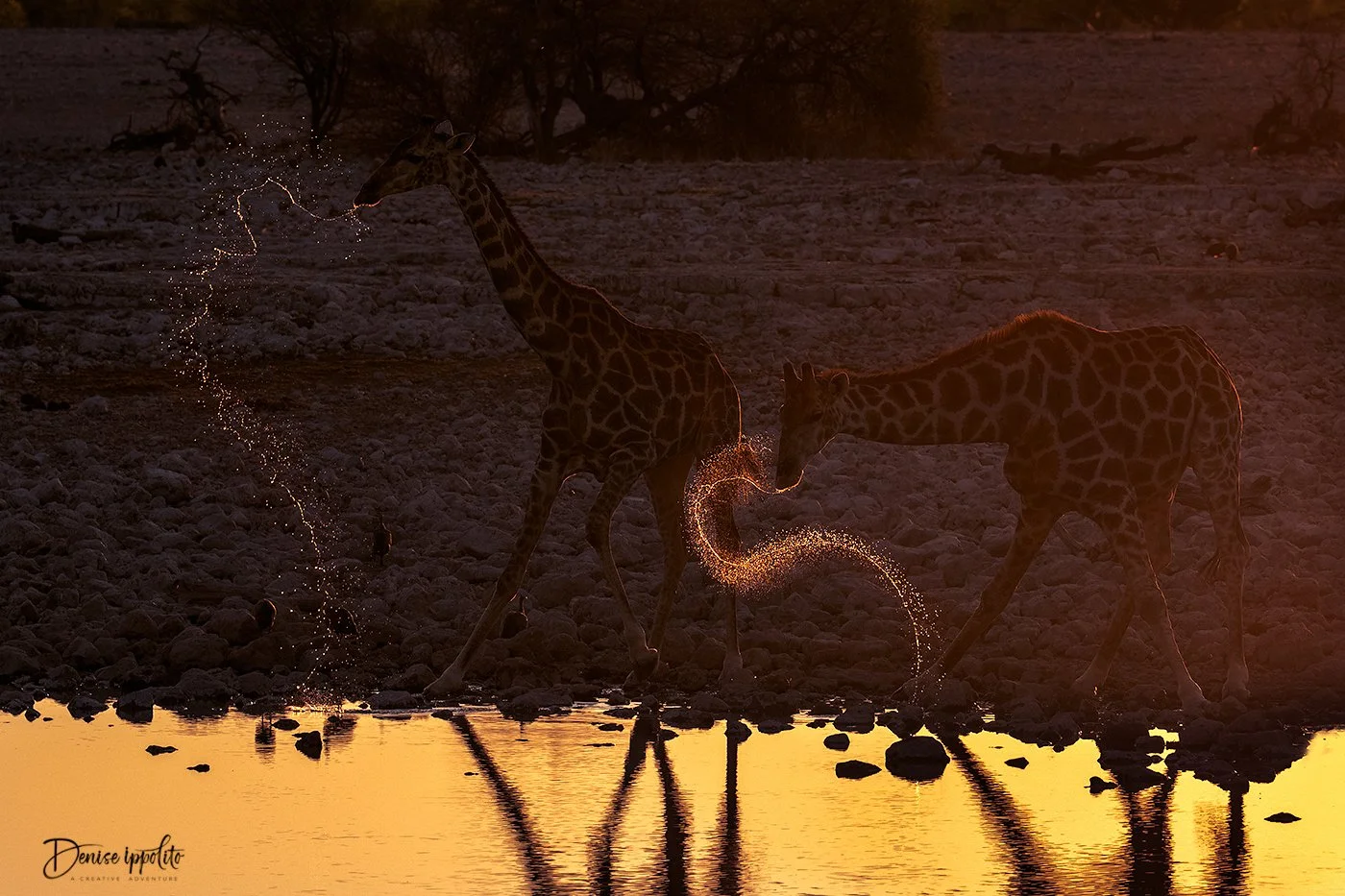
Last light at the watering hole with two giraffes.
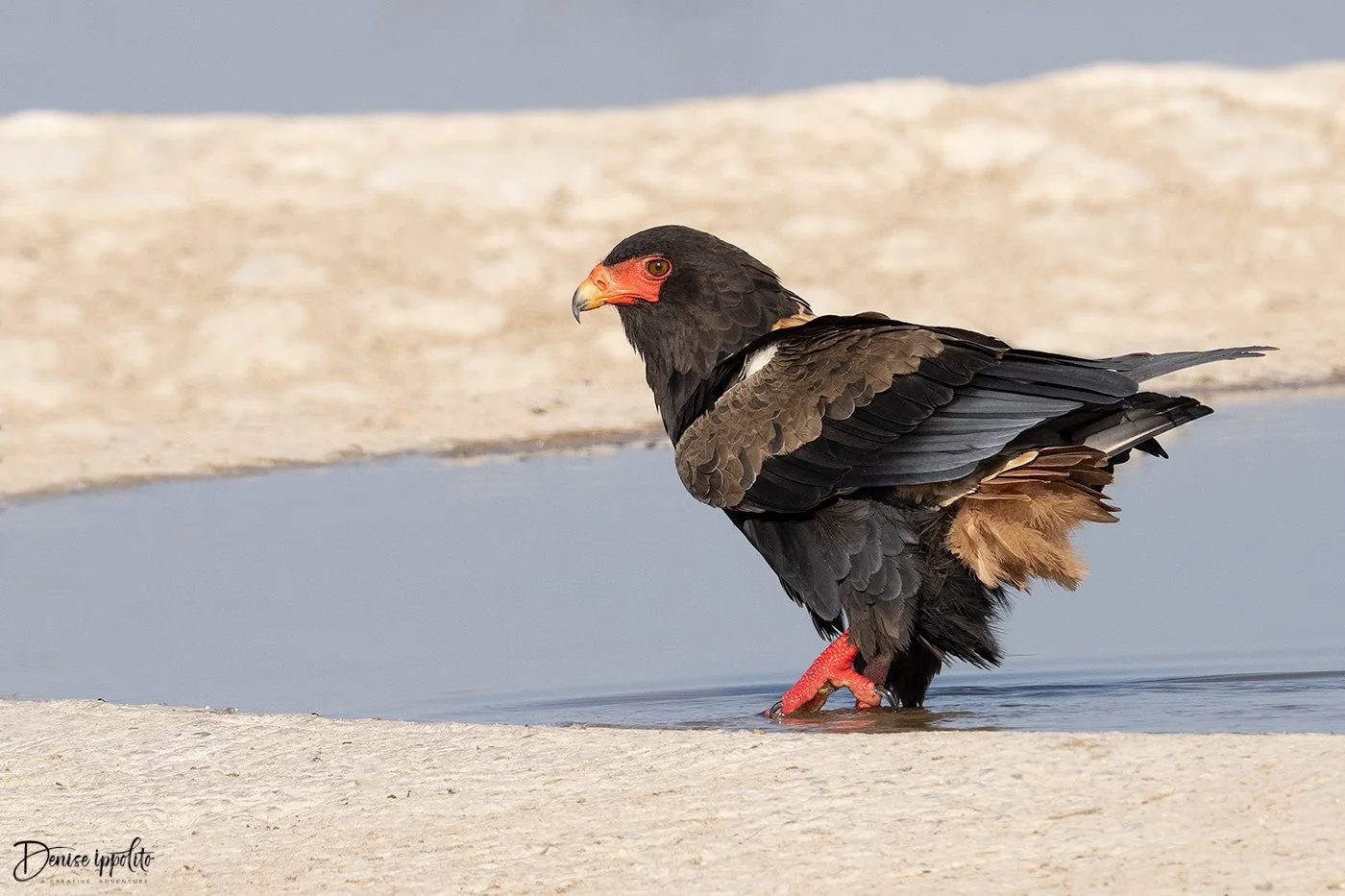
During our game drives, we came across a small group of elephants splashing in one of the many watering holes located throughout the park. We also spotted a leopard that was hiding out in a wooden pump station at one of the watering holes, lots of oryx and springbok, impala, zebras, jackals, red hartebeest, kudus, wildebeest, 2 lions, one leopard, one cape fox, 3 spotted hyena, 2 bat-eared foxes, one bateleur eagle and one lone steenbok and much more. So, lots of great subjects!
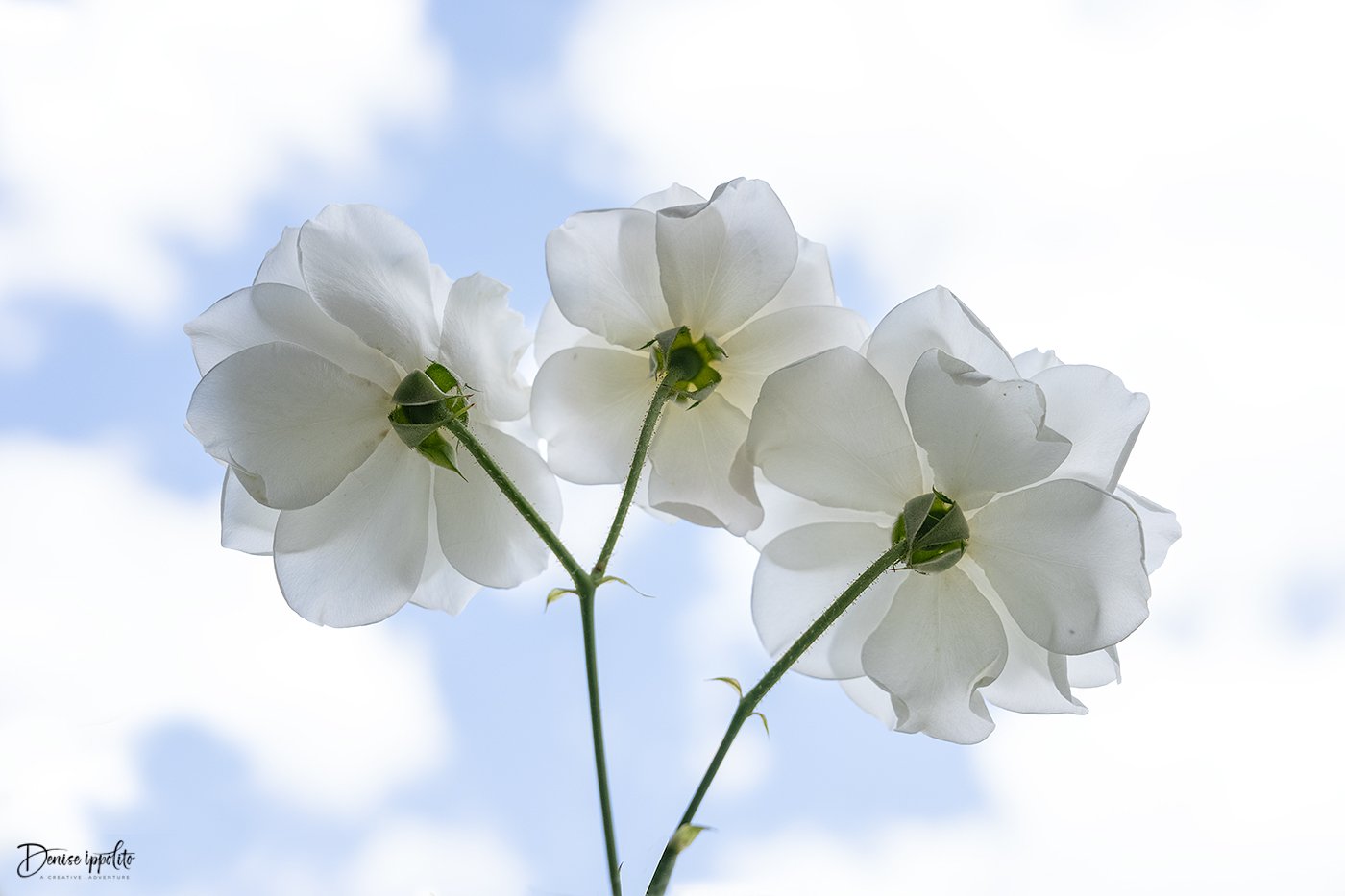
High-key flowers from one of our hotel stops.
Plans are underway for a repeat photo tour to Namibia in October of 2028. I’ll be leading that tour. Exact details are coming soon, but it will follow this tour closely with a few minor tweaks. For this trip I used my Sony a7R VI with my Sony 70-200mm II lens and the Sony 200-600mm lens for wildlife. I used my Sony a7R VI (I brought the A1 as a backup) with the Sony 12-24mm f/2.8 lens for night skies and Quiver tree shots. I also used my 12-24mm lens at the ghost town. I brought the Sony 24-105 (my walk around lens) for the other landscape shots. I left my new Sony 100-400mm lens home this time as there was too much overlap.
*Our Namibian guide suggested a good read — “The Sheltering Desert” by Henno Martin, based on geologists’ survival during WWII in the Namid Desert. He urged us to read it as it is full of adventure and a hard book to put down.